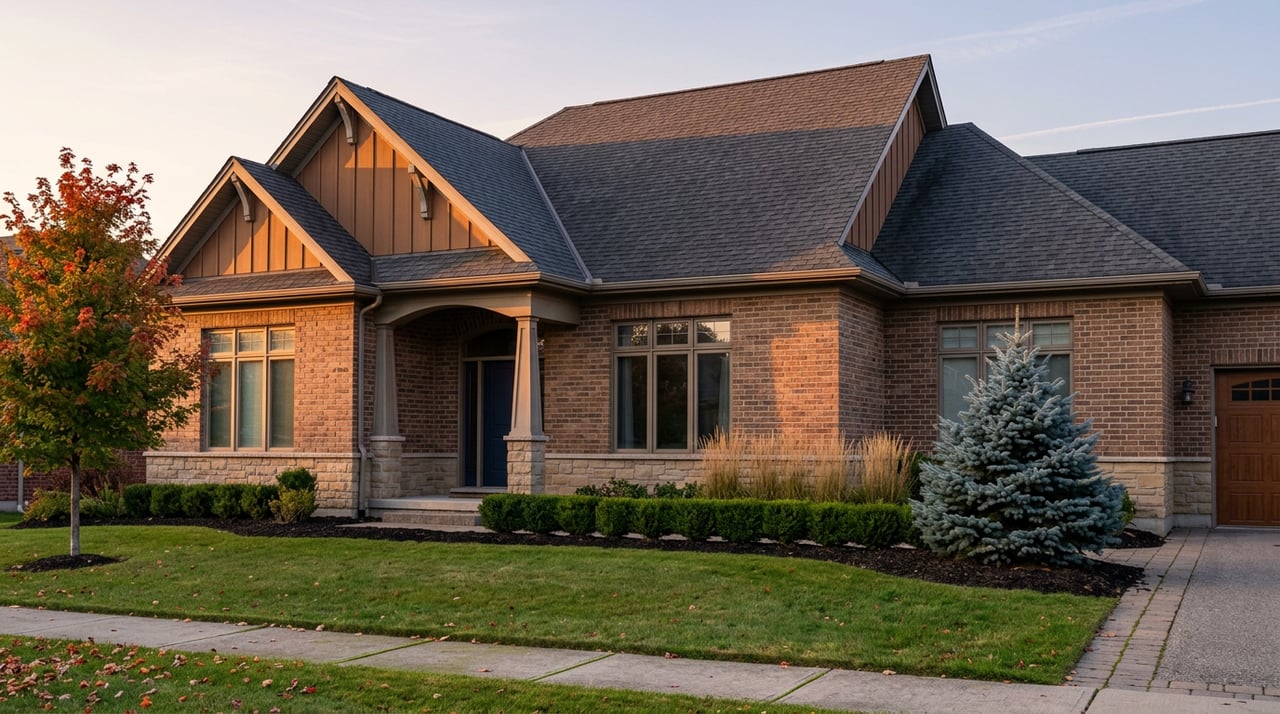
Kathy Morgan and her husband bought their home in Aurora's Blackstone neighborhood about ten years ago, drawn in by the neighborhood's golf course and what felt like a settled, established community. Nothing about the purchase felt unusual. Then in 2024, her property tax bill jumped in a way her mortgage statement never warned her about, and she went looking for an explanation. What she found wasn't a mistake. It was a mechanism working exactly as designed, just not in a way anyone had explained to her at closing.
Her story, first reported by CBS Colorado, is the clearest evidence of something buyers comparing Aurora neighborhoods rarely think to check: two homes can carry the same list price and a meaningfully different real cost, and the gap between them tends to widen after you move in, not shrink.
The Mechanism Nobody Puts in the Listing
Most new construction in Aurora sits inside a metro district, a local government formed under Colorado's Special District Act to finance roads, water lines, parks, and other infrastructure a developer would otherwise have to build upfront. Instead of folding that cost into the sale price, the district issues bonds and repays them through a mill levy added to your property tax bill. The City of Aurora's own metro district page confirms this has been standard practice since 2004, with a model service plan meant to cap how much any one property can be taxed.
The cap exists. What it doesn't do is keep the number stable, or keep it comparable from one Aurora neighborhood to the next.
A typical Aurora property, spanning the usual mix of county, city, school, and standard special district mills, commonly lands somewhere between 80 and 130 mills combined, according to a breakdown of the city's tax structure. Painted Prairie, a newer master-planned community near the airport, publishes a very different number for its own residents: a 2025 total mill levy of 168.5 to 199.6 mills, according to the community's own homeowner FAQ. That includes 27.479 mills for Adams County and 7.087 for the City of Aurora, the same government overhead any Aurora property would carry, with the remainder, somewhere between roughly 134 and 165 mills depending on the specific address, coming from Painted Prairie's own metro district numbers.
Here's what that looks like on paper, using the figures each entity has actually published:
| Neighborhood type | Combined mill levy (approx.) | What's driving it |
|---|---|---|
| Typical Aurora property, citywide | 80 to 130 mills | County, city, school, standard special districts |
| Painted Prairie (2025, per community FAQ) | 168.5 to 199.6 mills | Same county and city mills, plus one of Painted Prairie's own metro district levies (58.5 to 67.1 mills, depending on address) |
Same city government overhead in both cases. A meaningfully different bill, on the same assessed value, because of which specific metro district number the parcel happens to fall under.
The Bill That Grew While Nobody Was Watching
The Painted Prairie numbers are a snapshot. Blackstone is the part of the story that shows what happens over time, and it's the reason this matters more to a buyer than a single year's comparison suggests.
Blackstone is a district of roughly 950 homes that, for years, contributed a small regional improvement mill levy, just 1 mill, to a joint authority called the South Aurora Regional Improvement Authority, or SARIA. In 2022 and 2023, that contribution ran about $52,000 a year for the whole district. In 2024, it jumped to $353,816, a 571 percent increase in a single year, adding roughly $380 in taxes to the average Blackstone home. The mill levy behind that jump rose from 1 mill to 6, and homeowners posting to Colorado's Metropolitan District Homeowners' Rights Task Force that same year reported the regional levy had climbed further still, to 6.245 mills, with an inflation factor built in that could keep pushing the number higher for another two decades. The increase wasn't a one-year blip either: Blackstone's own 2026 budget, reviewed at a February 2026 board meeting, still shows that regional improvement tax line running close to $349,000, roughly where it landed back in 2024.
Nobody did anything wrong here. Solin, the district manager for SARIA, told CBS Colorado the increase was a requirement written into Aurora's model service plan from the start. The mill levy Morgan is paying today was authorized before she ever made an offer. It just hadn't been activated yet when she signed.
Why It Climbs Instead of Leveling Off
The reason this keeps happening isn't a fluke of one district. SARIA's own members include Beacon Point, Forest Trace, Inspiration, Kings Point South, Prairie Point, Pronghorn Valley, Senac South, Sorrel Ranch, Southlands, Wheatlands, and Whispering Pines, each an individual metro district that has agreed to route a piece of its mill levy into a shared authority funding regional projects like a new Aurora Parkway bridge over E-470, the Gartrell Road bridge expansion, and improvements along Gun Club Road. As that regional to-do list grows, so does each member district's required contribution, regardless of whether the specific road being widened is anywhere near your subdivision.
Solin confirmed to CBS Colorado that other metro districts in Aurora would soon see similar increases. That's not a warning about one unlucky district. It's a forecast from the person who runs the authority, describing a pattern built into how these districts are structured to grow.
The incentive here isn't hidden, it's just quiet. A lower mill levy in year one makes a new-construction listing look more competitive against an established neighborhood. The developer, who typically controls the district board early on, has every reason to keep that early number small. The cost of the roads, parks, and amenities doesn't disappear. It gets financed forward, onto a mill levy schedule that steps up as the district matures and joins regional funding obligations like SARIA.
What to Actually Compare Before You Write an Offer
None of this is a reason to avoid new construction in Aurora. Southshore, Painted Prairie, and the communities built through SARIA's member districts offer parks, trails, and amenities that an established neighborhood often can't match without decades of buildout. The point is that the list price and the current-year tax line on the MLS sheet are not the same thing as your long-term carrying cost, and the two numbers can diverge for years after closing.
A few concrete steps make that comparison possible before you're under contract:
Ask for the property's current total mill levy, broken out by taxing authority, not just the dollar figure on last year's bill. A new-construction home's current tax number is often based on the value of vacant land, not the finished house, so it understates what you'll actually owe.
Ask whether the metro district is a member of an authority like SARIA, and whether that authority has any pending service plan amendments. Several SARIA member districts, including Forest Trace, Kings Point South, Prairie Point, and Whispering Pines, had amendments to their ARI mill levy terms moving through the approval process as recently as January 2025.
Check which county the property sits in. Aurora spans Adams, Arapahoe, and Douglas counties, and each county assessor's office handles the lookup separately, so the address matters as much as the neighborhood name.
Use the Colorado Department of Local Affairs' special district map to see whether a specific address falls inside a metro district's boundary before you assume a listing's tax estimate holds.
None of this is tax or legal advice, and a title company or CPA should confirm the final numbers before closing. But asking these questions before you write an offer turns a surprise into a line item you priced in from the start.
A Few Questions Worth Asking Directly
Is a metro district the same thing as an HOA? No. An HOA is a private association that collects dues and enforces covenants. A metro district is a unit of local government with the authority to issue bonds and levy property taxes, and its charges typically show up on your county tax bill rather than as a separate monthly invoice.
If this year's tax bill looks low, does that mean the mill levy is low? Not necessarily. A new-construction home's early tax bill is often calculated against the value of the land before the house was built, which can make the number look smaller than what you'll actually be assessed once the home is finished and the district's full mill levy applies.
Aurora's mix of established neighborhoods and ambitious new communities is part of what makes it worth taking seriously as a place to buy. Understanding which mill levy stack a specific address sits inside, and where that levy is headed, is how you compare two homes honestly instead of comparing two list prices.
If you're weighing a new-construction community against an established Aurora neighborhood and want help pulling the actual mill levy numbers for a specific address, Nichelle Phillips at Lifestyle International Realty Colorado can walk through the comparison with you. Get Your Instant Home Valuation to start the conversation with real numbers in hand.